

Lafayette County Citizens Forced to Consent to Intrusive, Warrantless AI Surveillance to Enter Their Own Community
MAYO, FL – For generations, the Hal W. Adams Bridge and the crossing at Branford have served as the gateways to our community—vital arteries connecting us to work, healthcare, and family in Live Oak and Gainesville. But today, those gateways have been quietly transformed into intrusive warrantless checkpoints with no way to opt-out.
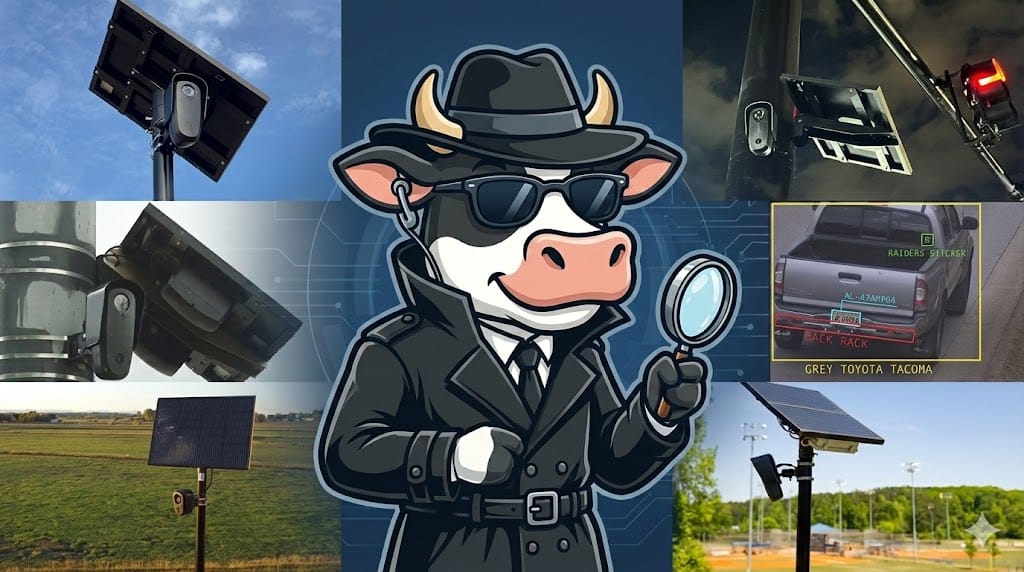
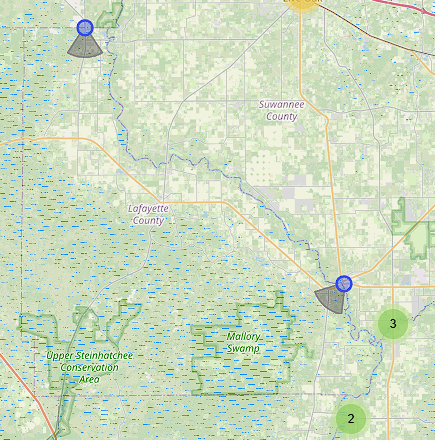
Reports have confirmed the installation of AI-powered surveillance cameras, known as Flock Safety automated license plate readers (ALPRs) at the county’s two most critical entry and exit points: the Hal W. Adams Bridge on SR-51 and the US-27 Bridge in Branford. The camera's are confirmed to be part of a universal surveillance system, with devices owned and operated by various Sheriff's Offices throughout Florida.
While law enforcement agencies across the region, including the Suwannee County Sheriff’s Office, tout these cameras as "useful tools" for solving crime, a growing chorus of privacy advocates and cybersecurity experts are warning that the cost to our civil liberties may be too high.
The "Vehicle Fingerprint" and Corporate Ownership
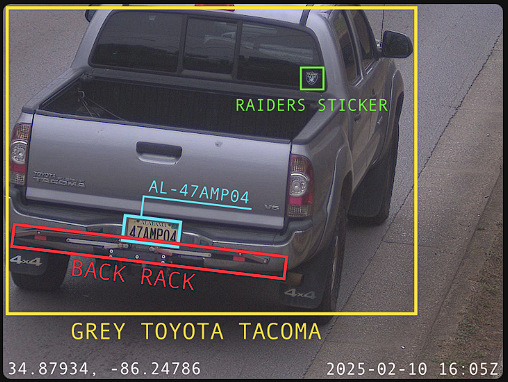
Crucially, these cameras do far more than read numbers. They capture a "Vehicle Fingerprint"—recording the make, model, color, dents, and bumper stickers—for all vehicles. This data can be linked with partnered corporations internal security footage (such as from commercial retailers like Walmart) to track citizens from the road to private appointments. Beyond local law enforcement, reports indicate this data is readily accessible to federal agencies, including Customs and Border Protection (CBP).
The most alarming fact is this: the data is not owned, controlled, or secured by the Sheriff's Office—it is proprietary information belonging to a powerful, private, for-profit corporation, Flock Safety. Though leased to police, this vast, nationwide database is centrally managed by the company, which grants itself a worldwide, perpetual license to use the data for its own purposes. This structure allows a private company, not a publicly accountable government agency, to collect, retain, and—in effect—traffic the movements of law-abiding citizens across state and federal lines without judicial oversight.
More Than Just a License Plate Reader
To the average driver, the device looks like a small, harmless traffic camera. But privacy experts warn that the technology inside is far more invasive than a standard speed trap.
Flock Safety cameras utilize proprietary "Vehicle Fingerprint" technology. They do not just read your tag; they analyze your vehicle’s physical appearance. The system records and categorizes:
- Make, model, and color.
- Bumper stickers and window decals.
- Roof racks, aftermarket wheels, and body damage.
- Temporary tags and missing plates.
This means that even if you haven't committed a crime, your daily movements are being built into a searchable profile. The system knows when you go to work, when you visit the doctor, and when you go to church. It creates a "diary" of your life based on your travel patterns across the river.
They Can Be Easily Hacked!
Perhaps the most alarming concern for Lafayette County citizens is the security of the data being collected. While Flock Safety claims their data is encrypted, independent security researchers have exposed severe vulnerabilities in the system.
In recent tests, cybersecurity experts demonstrated that these cameras could be compromised in as little as "30 seconds with a stick" (a simple physical tool). Furthermore, researchers have found law enforcement login credentials for these systems available on the dark web.
"The danger isn't just that the government is watching," warns a local privacy advocate. "The danger is that these systems are often insecure. A hacker could potentially access the feed, track a specific person—like an ex-spouse or a business rival—and use that information for stalking or harassment."
Why Citizens Should Be Worried
The installation of this camera raises a critical question: Who has access to your data?
Unlike traditional police work, which requires a warrant to search a home or vehicle, accessing Flock data often requires no judicial oversight. In jurisdictions across the country, this lack of oversight has led to documented cases of misuse:
- Forced Consent: To cross the river for groceries in Live Oak is to consent to surveillance. There is no "opt-out" lane on the Hal W. Adams Bridge.
- The "Guilty Until Proven Innocent" Standard: These cameras do not wait for a crime to occur. They collect data on everyone, retaining records of law-abiding citizens for 30 days or more. This creates a retroactive dragnet where you are being watched in case you are ever a suspect.
- Constitutional Concerns: Privacy advocates argue that this amounts to a warrantless search of your movements, chilling the freedom of travel that rural Floridians hold dear.
Spreading Like Wildfire Across North Florida
The camera on the Suwannee River bridge is not an isolated incident. It is part of a massive, quiet expansion of surveillance infrastructure throughout North Florida.
- Suwannee County: The Sheriff’s Office has been aggressive in rolling out these devices, viewing them as a force multiplier for their deputies.
- Lake City & Columbia County: Similar networks are active, creating a "digital fence" along the I-10 and I-75 corridors.
- Jacksonville: The city has one of the densest networks of these cameras in the state.
Lafayette County: The Last Stand?
Currently, Lafayette County stands as one of the few remaining jurisdictions in North Florida that has not yet purchased or installed these devices on our own roads. This offers citizens a rare and urgent opportunity.
The expansion of this surveillance grid into Lafayette County is not inevitable. We have the chance to stop it before it starts.
Across the country, communities are waking up to the reality of warrantless tracking. Citizens in Norfolk, Virginia, recently filed a federal lawsuit arguing that Flock cameras violate the Fourth Amendment. In Greene County, Indiana, residents successfully mobilized to demand the removal of cameras, launching petitions to protest the invasion of privacy.
Lafayette County citizens can lead the way in Florida by petitioning the County Commission to pass a preemptive BAN on Flock Safety cameras.
Your Action Plan to Protect Lafayette County
1. Petition for a Ban (The "Preemptive Strike") Don't wait for the cameras to appear on Main Street.
- Action: Contact your County Commissioners immediately.
- The Message: "I am asking the Commission to draft an ordinance banning the installation of automated license plate readers (ALPRs) and warrantless mass surveillance devices on Lafayette County right-of-ways. Let’s keep Lafayette free."
2. Demand a "No-Spy" Resolution & Inter-County Action We must address the neighbors watching us.
- The Demand: Ask the Lafayette County Commission to formally reach out to neighboring county commissions (such as Suwannee, Madison, and Columbia) with a clear message: "Stop spying on our entryways."
- Diplomatic Pressure: Our Commissioners should issue a formal resolution demanding that neighboring counties remove any surveillance devices specifically targeting Lafayette County bridges. Good neighbors do not build digital fences around each other's homes.
3. Use the Tools
- Verify: Check Deflock.me to see if any new cameras have popped up inside our county lines.
- Report: If you see a solar-powered camera appearing on a pole in Mayo, Day, or Alton, take a picture and report it immediately.
4. Public Comment Attend the next County Commission meeting on December 9th, 2025 at 9:00 a.m.. Stand up and cite the examples of Norfolk and Greene County. Remind our elected officials that safety does not require the surrender of our liberty.
As you drive from Mayo to Branford, or head up to Live Oak, you are likely passing multiple checkpoints, each one adding another entry to your digital file. For the citizens of Lafayette County, the open road is becoming a little less open, and a lot more watched.
You can learn more about the AI-powered cameras at deflock.me